A real fundraiser for a real charity, run by a four-person team as a second-year TU Dublin project in November 2023. Donations went to Pieta House through JustGiving.
Trust first, then the ask: €382 from 26 donations, with no ad spend.
At the reporting date, a week after the first post, with the fundraiser still running.
Context
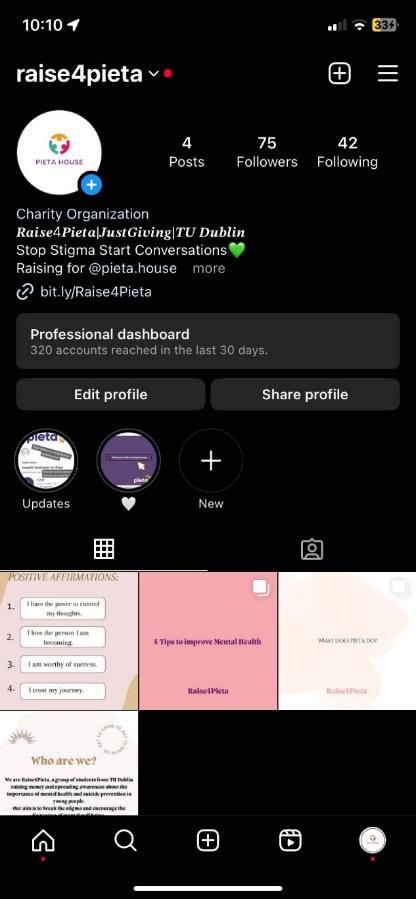
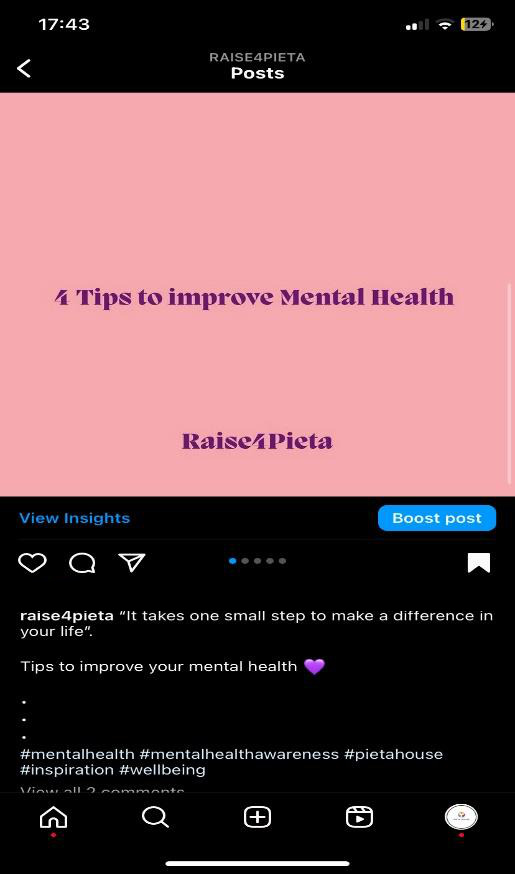
Raise4Pieta was an Instagram fundraiser for Pieta House, the Irish charity that supports people in suicidal crisis. Four of us chose the charity, built the page from scratch and set up the JustGiving page donors gave through. No paid media.
The problem
Plenty of young people cared about mental health. Getting them to give was the hard part. Money was tight, lots of other fundraisers were asking at the same time, and some people we spoke to were wary of giving to a large charity directly. We set a €500 target.
What the research said
Before posting anything, we interviewed four potential donors, two aged 16 to 20 and two aged 35 to 50, and read the Charities Regulator's research on why people give.
- Trust decides whether people give. The national research and our interviews pointed the same way.
- Both younger interviewees would give online, and both use Instagram.
- They'd rather give to a fundraiser a friend backed. One said giving through a fundraiser felt more impactful than giving direct.
The strategy: earn trust, make the ask small, borrow reach
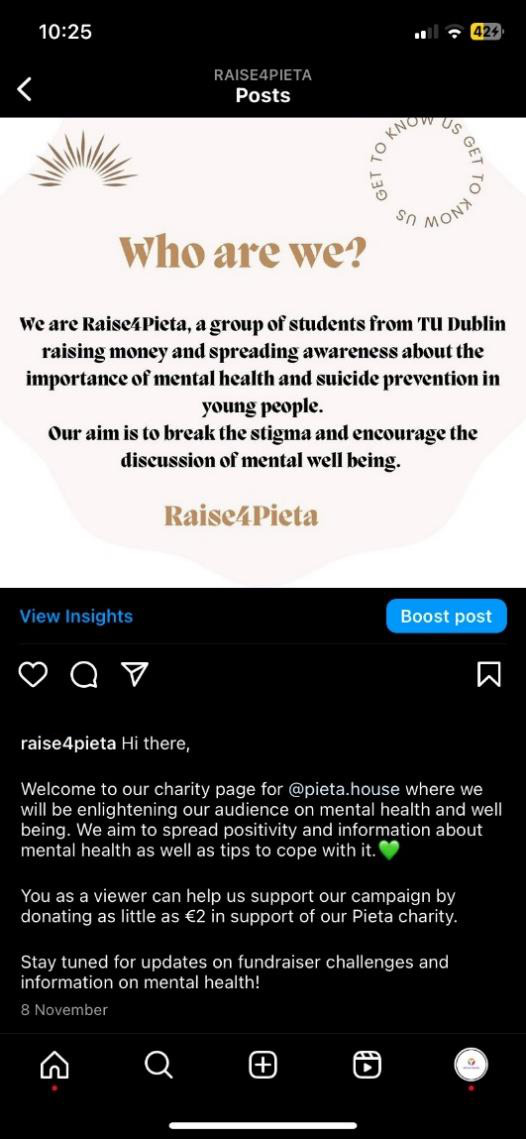
- 1.Build trust before asking. A complete profile, a clear bio, the team's own accounts tagged, and a plain "who we are and why" post first.
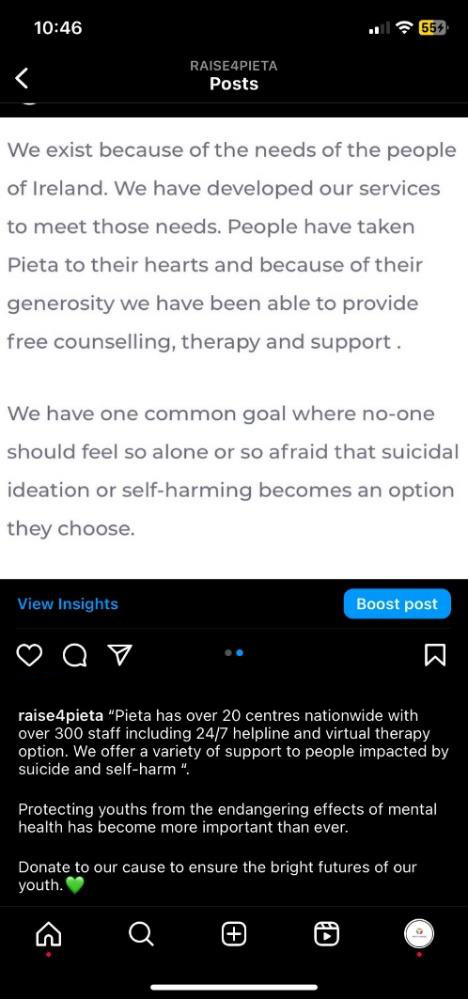
- 2.Make giving easy. A small ask, "as little as €2 can make a big difference", and one tidy donation link in the bio.
- 3.Borrow trust and reach for free. Our own networks first, then outreach to influencers. Two, with 26,000 followers between them, shared our posts on their Instagram stories, and the team reported more donations followed. A third, with 660,000 followers, donated €100.
- 4.Measure as we went. Reach, visits to the Instagram page, engagement and donations, checked while the campaign ran.
Results
At the reporting date, a week after the first post:
- €382 raised from 26 donations, about €14.70 on average.
- 307 accounts reached, 545 visits to the fundraiser's Instagram page and 83 accounts engaged.
- €0 spent on advertising.
- 76% of the €500 target at that point, with the fundraiser still running.
What the numbers taught us
- The introduction post did best. The first post, a "who we are and why" mission statement, got the most engagement and the most donations. Our read: people gave once they knew who was asking.
- Sharing moved donations. Donations spiked when the page was shared to a large audience.
- Warm networks run out. Once the page had reached most of the people it could, growth stalled. The next step was a new audience.
How it shows up in my work now
I work in the same order now: find what makes people hesitate, build trust first, make the next step easy, get it in front of the right people, then measure what turns into enquiries and sales. The difference now is that I record a starting point first and every step runs through the same written-down checks, so you can see exactly what changed.
What I'd do differently
- Record a starting point on day one, so the change shows, not just the totals.
- Line up the next audience, such as an event, a partner or a sponsor, before the warm network runs out.
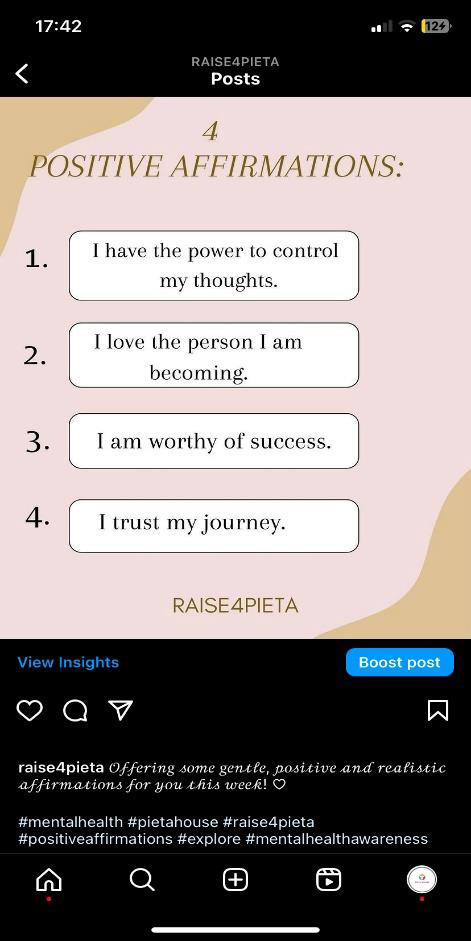
- Build a series on the post that worked, with photos, short video and personal stories, before moving on to general tips.
How we worked
Team project for the Digital Marketing Management and Marketing Research modules, run by the four of us as a group.